Introduction: SEO Didn’t Die—Old SEO Did
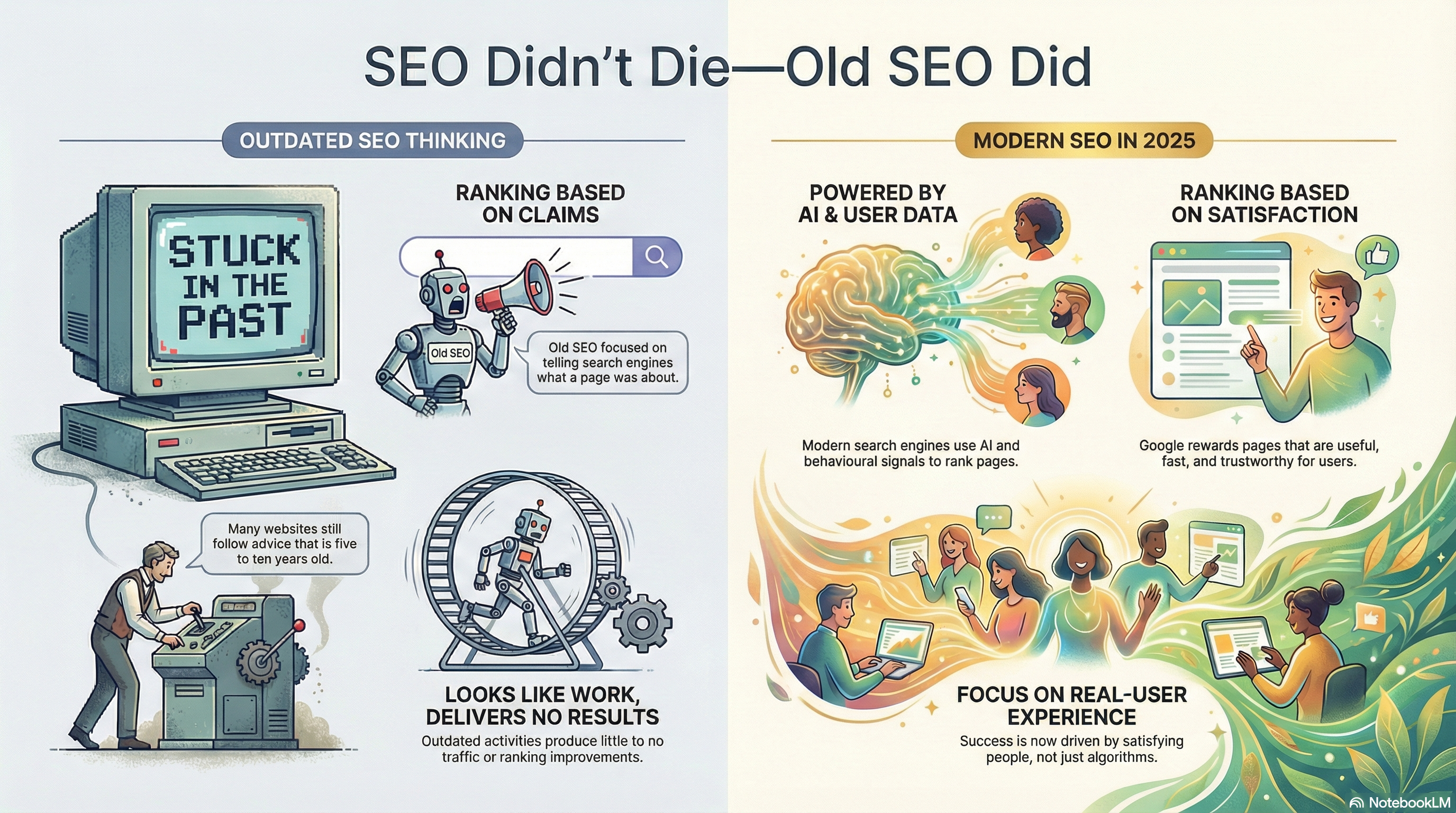
SEO in 2025 is not broken—but outdated SEO thinking is. Many websites are still stuck in strategies that worked five or even ten years ago, blindly following advice that Google has already moved past. As a result, they’re publishing content, optimizing pages, and building links that look like SEO work—but deliver little to no results.
Search engines today are powered by advanced AI, real-user data, and behavioral signals. Google no longer ranks pages based on what you claim your content is about. It ranks pages based on how useful, fast, trustworthy, and satisfying they are for real users.
In this blog, we’ll break down five SEO myths that are actively killing rankings in 2025, explain why they no longer work, and show you what actually drives traffic, rankings, and conversions today.
Myth #1: Meta Keywords Still Matter
This is one of the oldest—and most damaging—SEO myths still circulating.
For years, meta keywords were used to tell search engines what a page was about. In 2025, they are completely ignored. Google stopped using meta keywords as a ranking factor more than a decade ago, yet many websites still waste time filling them in.
Why meta keywords don’t work anymore:
- They were heavily abused and spammed
- Google’s AI understands content context without them
- They provide zero ranking benefit
- They do not influence crawl, indexing, or visibility
Spending time on meta keywords today is like optimizing for a search engine that no longer exists.
What Actually Matters Instead
- Clear page intent
- High-quality, helpful content
- Strong internal linking
- User engagement signals
If you’re still optimizing meta keywords, you’re optimizing for the past—not for 2025.
Myth #2: Keyword Density Is a Ranking Factor
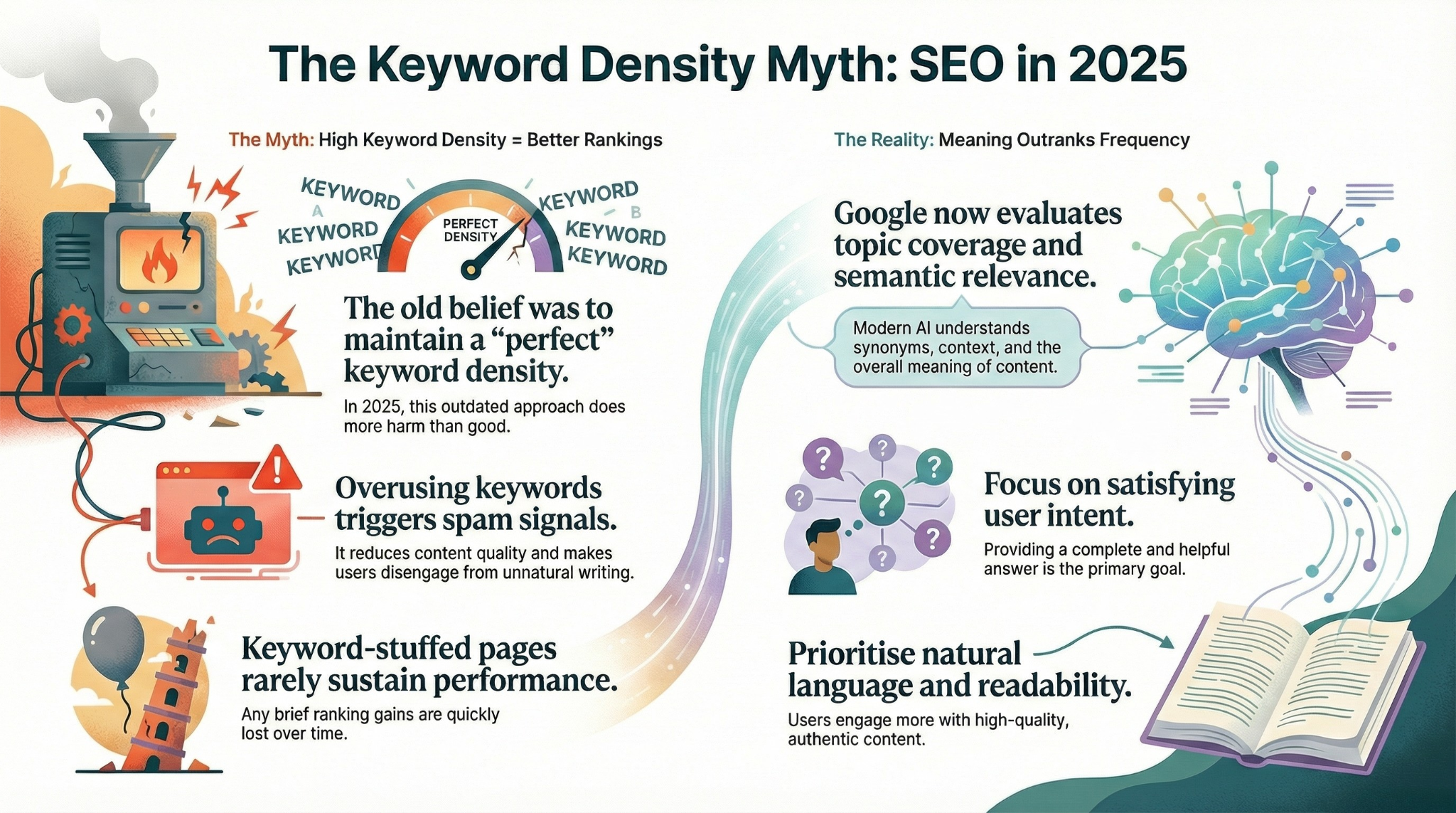
Many SEO guides still recommend maintaining a “perfect” keyword density. In 2025, this approach does more harm than good.
Google no longer ranks content based on how many times a keyword appears. Instead, it evaluates topic coverage, semantic relevance, and intent satisfaction. Overusing keywords now triggers spam signals and reduces content quality.
Why keyword density fails in 2025:
- AI understands synonyms and context
- Forced repetition hurts readability
- Users disengage from unnatural content
- Google prioritizes meaning, not frequency
Keyword-stuffed pages may rank briefly—but they rarely sustain performance.
What Actually Works
- Natural language writing
- Covering subtopics and related questions
- Using synonyms and contextual phrases
- Writing for humans first, algorithms second
If your content sounds robotic, Google’s AI will treat it as low quality.
Myth #3: Backlinks Alone Can Rank Bad Content
Backlinks still matter—but they are no longer a magic shortcut.
In 2025, backlinks amplify good content. They do not rescue bad content. Many sites invest heavily in link building while ignoring content quality, page experience, and user satisfaction. The result is temporary rankings followed by steady decline.
Why backlinks alone don’t work anymore:
- Google evaluates on-page quality first
- Poor engagement weakens link impact
- Spammy or irrelevant links are discounted
- Helpful content now outperforms link-heavy weak pages
Links are a multiplier, not a foundation.
What Actually Ranks
- Content that fully answers search intent
- Pages with strong engagement and low bounce
- Topical authority across related content
- Clean UX and fast performance
Without quality and usefulness, backlinks lose power.
Myth #4: Publishing More Content Automatically Improves SEO
Quantity without strategy is one of the fastest ways to kill SEO performance.
Many websites believe that publishing blogs frequently—regardless of quality—will improve rankings. In reality, thin, repetitive, or low-value content weakens topical authority and confuses search engines.
Why “more content” doesn’t mean better SEO:
- Thin content dilutes authority
- Overlapping pages cause keyword cannibalization
- Low engagement sends negative signals
- Crawl budget gets wasted
Google prefers fewer, stronger pages over hundreds of weak ones.
What Actually Works
- Topic clusters instead of random posts
- In-depth, comprehensive content
- Regular content updates instead of endless new posts
- Clear internal linking structure
One powerful page can outperform ten average ones.
Myth #5: SEO Is Only About Google Rankings
This myth limits growth more than any other.
In 2025, SEO is not just about ranking—it’s about visibility, trust, and conversion. Search engines evaluate how users interact with your site after clicking. Rankings are influenced by experience, not just relevance.
Why ranking alone is not enough:
- Traffic without engagement doesn’t last
- Poor UX kills conversions
- Slow sites lose rankings due to Core Web Vitals
- AI-driven search prioritizes satisfaction
SEO today is deeply connected to UX, CRO, and performance.
What Actually Drives Traffic in 2025
- Fast-loading pages
- Mobile-first design
- Clear navigation and structure
- Helpful, trustworthy content
- Strong brand signals
SEO success now happens after the click—not before it.
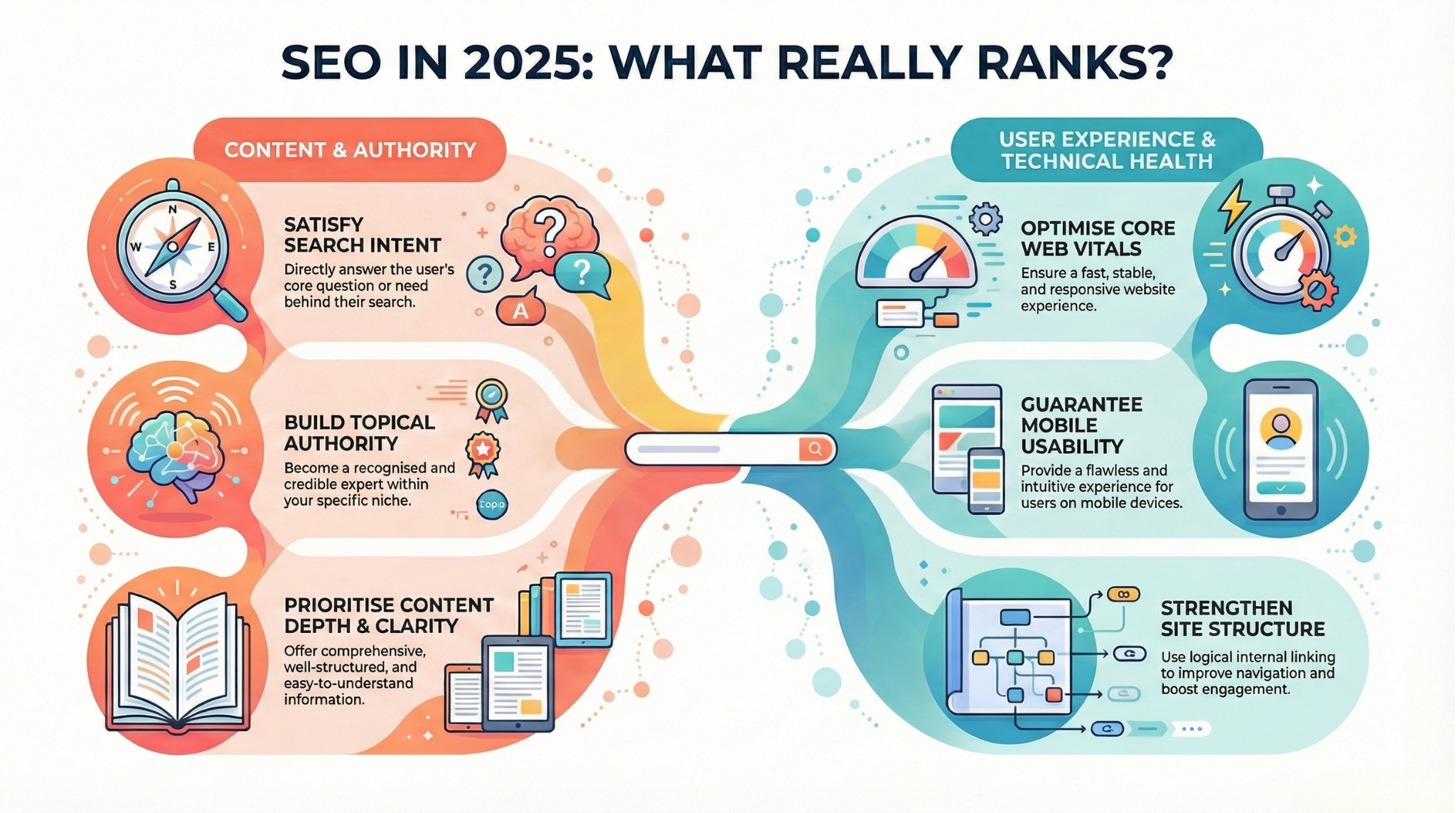
So What Actually Ranks in 2025? (The Real SEO Factors)
Here’s what consistently drives rankings and traffic today:
- Search intent satisfaction
- Content depth and clarity
- Topical authority
- Core Web Vitals performance
- Mobile usability
- Engagement signals (time on page, interactions)
- Internal linking and site structure
- Brand trust and credibility
SEO is no longer a checklist. It’s a system.
The Real Cost of Believing SEO Myths
Following outdated SEO advice doesn’t just waste time—it actively hurts growth.
Consequences include:
- Lost rankings
- Declining traffic
- Low conversion rates
- Wasted content budgets
- Missed competitive opportunities
In fast-moving digital ecosystems, outdated strategies are a liability.
Final Thoughts: Modern SEO Is User-First SEO
SEO in 2025 rewards websites that genuinely help users. The algorithm has matured to the point where shortcuts no longer scale. Tricks fade quickly. Value lasts.
Key takeaway: If your SEO strategy is built on myths, your rankings will always be unstable.
Stop optimizing for search engines of the past. Start optimizing for users, intent, and experience.
That’s what ranks in 2025—and beyond.