Introduction: Stop Blaming the Algorithm
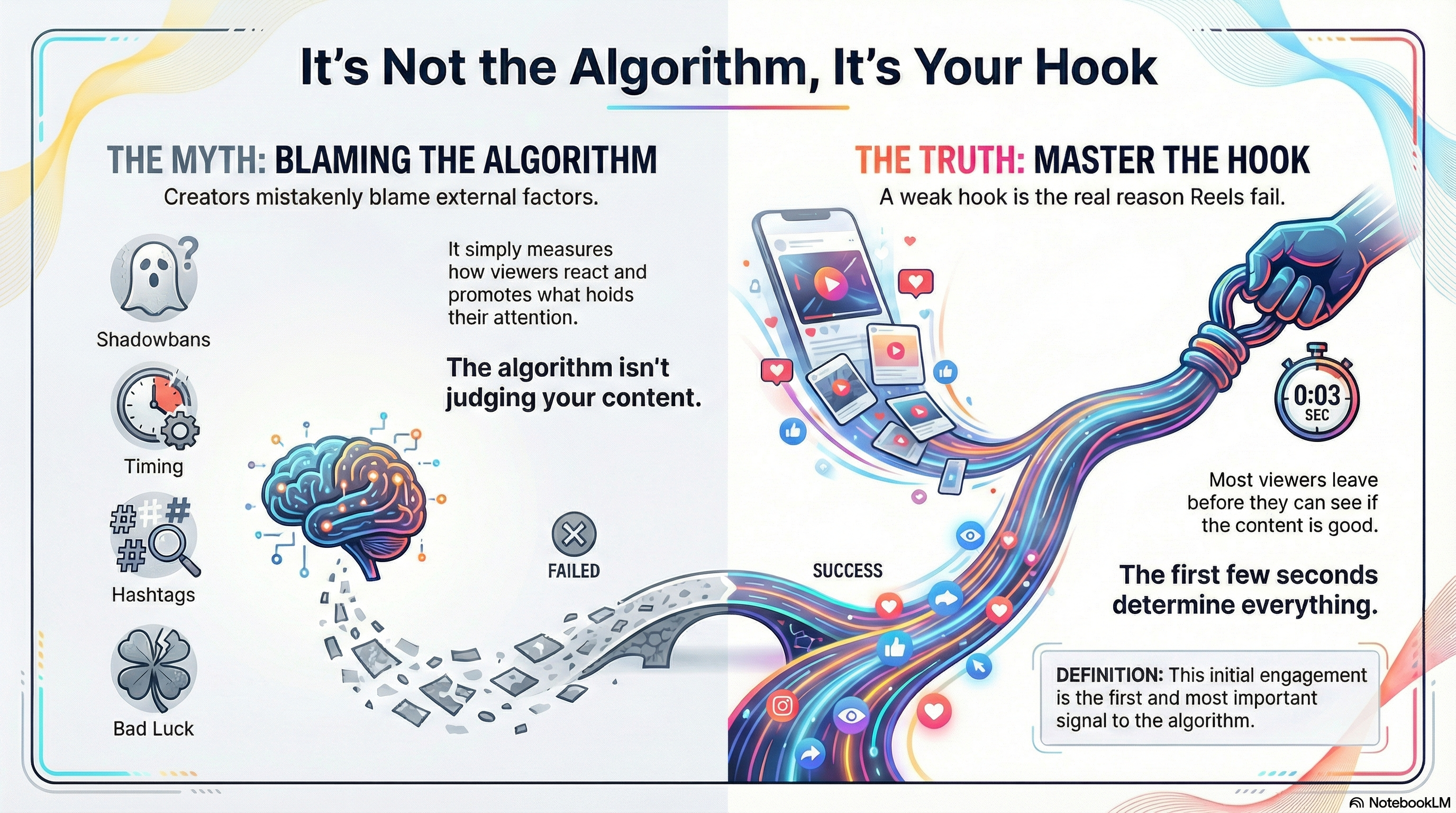
If your Reels aren’t going viral, the easiest thing to blame is the algorithm. Shadowban. Timing. Hashtags. Luck. But here’s the uncomfortable truth: the algorithm is not holding you back—your hook is.
In 2025, Instagram Reels operate in one of the most competitive attention environments in history. Every user scrolls past hundreds of videos per session, and the platform has one simple goal: keep people watching. The algorithm doesn’t “judge” your content—it measures how people react to it. And the very first signal it looks at is what happens in the first few seconds.
That’s where most creators fail. Not because their content is bad—but because viewers never stay long enough to find out.
The 3-Second Rule: The Real Gatekeeper of Virality
Instagram doesn’t decide if your Reel is good. Viewers do—within the first 3 seconds.
Those first 3 seconds answer one question in the viewer’s mind:
If the answer is unclear or boring, they scroll. When they scroll, the algorithm reads that as disinterest. Enough people scroll away early, and your Reel stops getting distributed—no matter how good the rest of the video is.
This is why:
- Long, slow intros kill reach
- Logos at the start kill momentum
- “Hey guys…” kills retention
Virality begins before your content even starts.
Why Most Reels Fail Before They Begin
Most creators treat Reels like mini YouTube videos. That’s a mistake.
Common mistakes that kill virality:
- Starting with context instead of impact
- Explaining instead of intriguing
- Talking about the topic instead of into the pain
- Saving the “good part” for later
On Reels, there is no “later.” If the hook doesn’t work immediately, the rest of the video is invisible.
How the Reels Algorithm Actually Works (In Simple Terms)
The Reels algorithm is brutally simple and brutally honest.
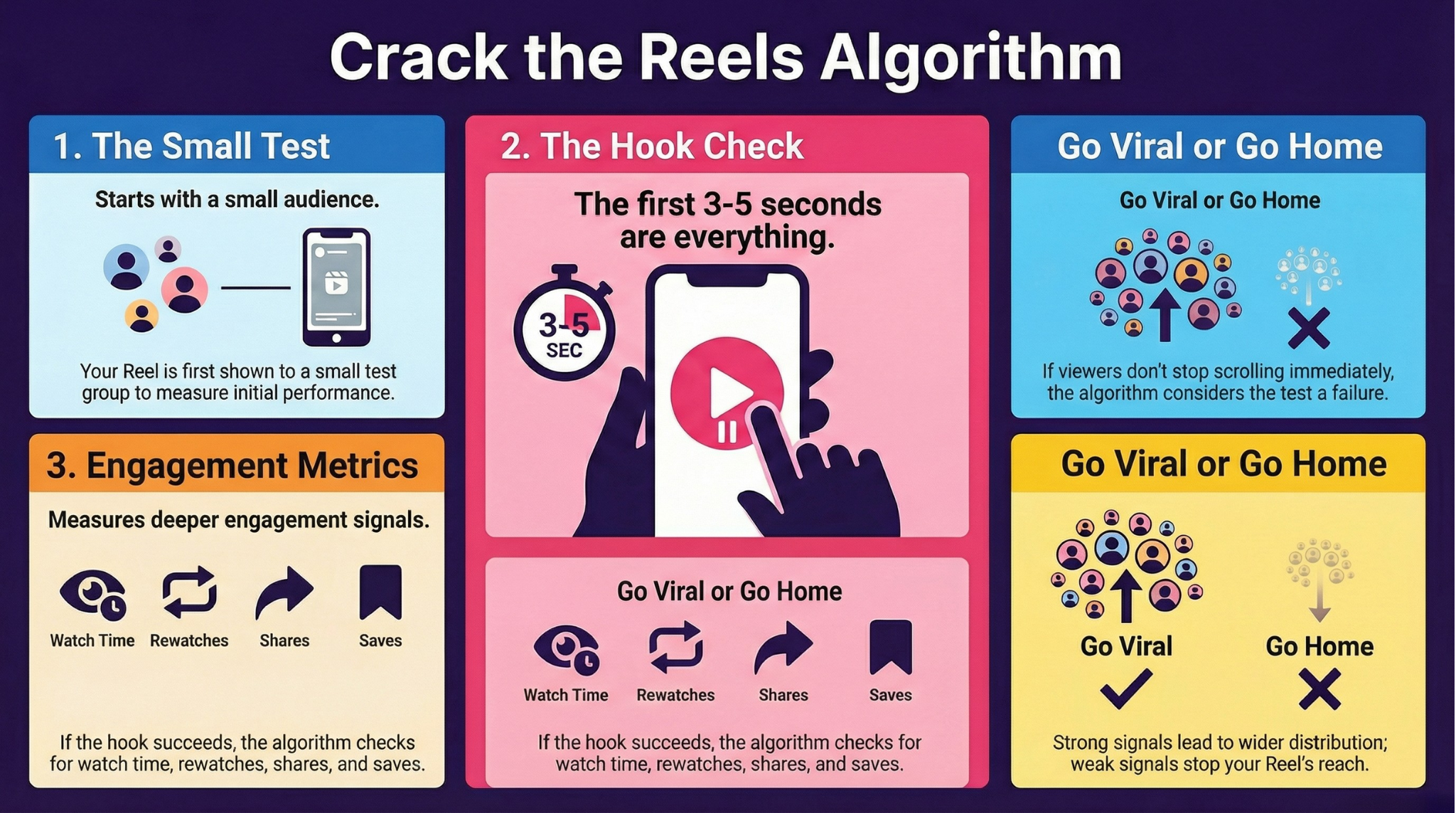
It tests your Reel in stages:
- Shows it to a small audience
- Measures early retention (first 3–5 seconds)
- Checks watch time, rewatches, saves, shares
- Expands distribution only if signals are strong
If people don’t stop scrolling immediately, the test fails. No hook = no second chance.
The Psychology Behind Scroll-Stopping Hooks
People don’t scroll because they hate your content. They scroll because:
- Their brain is seeking novelty
- Attention is fragmented
- They are subconsciously filtering content
A strong hook disrupts this pattern. It creates curiosity, tension, or recognition. The viewer thinks:
- “That’s me.”
- “Wait… what?”
- “I need to see this.”
Your hook doesn’t need to be loud—it needs to be relevant.
The 5 Hook Types That Make Reels Go Viral
1. Pain-First Hooks
Call out a specific frustration instantly.
“Your Reels aren’t viral because you’re doing this wrong.”
“If your videos die at 200 views, listen to this.”
Pain hooks work because people recognize themselves immediately.
2. Pattern Interrupt Hooks
Break expectations visually or verbally. Start mid-sentence, with movement, or with a bold statement.
“Stop posting Reels like this.”
“This is why Instagram ignores your content.”
The goal is to feel different from the last 10 videos they saw.
3. Curiosity Hooks
Reveal just enough—but not everything.
“No one tells creators this…”
“This tiny change doubled my reach.”
Curiosity keeps people watching to close the loop.
4. Direct Callout Hooks
Speak to one specific audience.
“If you’re a small business owner posting Reels…”
“Content creators, you need to hear this.”
Specific beats generic every time.
5. Proof-Based Hooks
Show results immediately (Screenshots, Analytics, Before/after visuals).
Proof builds instant credibility and stops skepticism.
Why Good Content Doesn’t Save Bad Hooks
This is the harsh reality: great value does not matter if no one watches long enough to receive it.
You could:
- Teach something brilliant
- Share a powerful story
- Give actionable advice
And still fail—because the hook didn’t earn attention.
On Reels, distribution comes before value delivery. The hook unlocks reach. Value sustains it.
How to Structure a Viral Reel (Simple Framework)
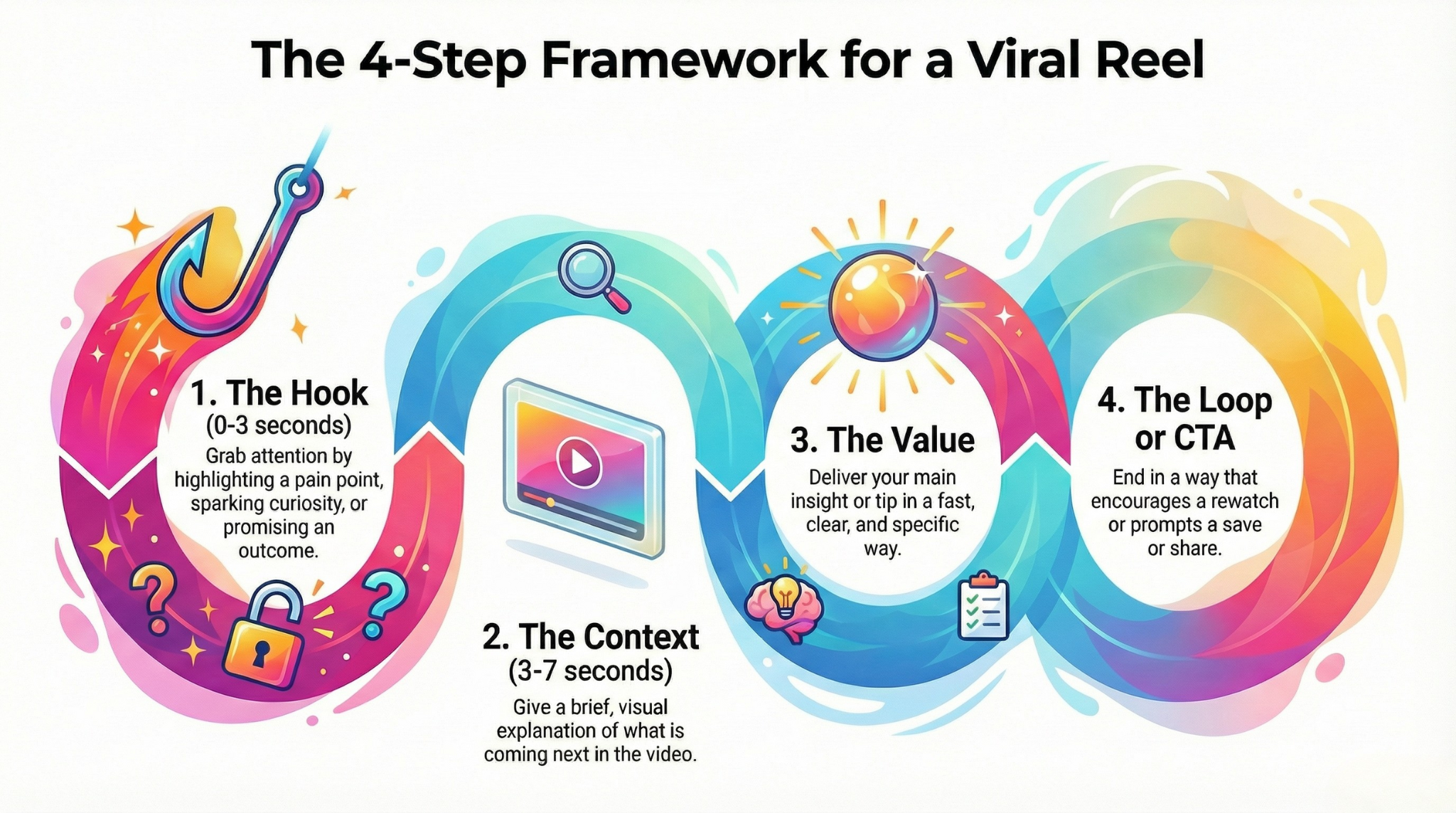
Hook (0–3 seconds)
Call out pain, curiosity, or outcome. No intro, no logo, no filler.
Context (3–7 seconds)
Brief explanation of what’s coming. Keep it tight and visual.
Value / Insight
Deliver fast, clear, and specific value.
Loop or CTA
End in a way that encourages rewatch or ask for save/share naturally.
Every second must earn its place.
Why “Consistency” Alone Won’t Make You Viral
Posting consistently without fixing your hooks is like shouting into the wind—louder, but still ignored.
Virality comes from:
- Testing hooks aggressively
- Iterating based on retention
- Studying where people drop off
One great hook can outperform 30 average posts.
How to Improve Your Hooks (Practical Steps)
- Watch your own Reel without sound—does it still grab attention?
- Check retention graph—do people drop in first 2 seconds?
- Rewrite hooks before reshooting entire videos
- Save viral Reels and study only the first 3 seconds
Don’t ask: “Is my content good?”
Ask: “Would I stop scrolling for this?”
The Truth About Viral Reels
Virality is not luck.
It’s not timing.
It’s not hashtags.
It’s attention engineering.
Creators who win on Reels understand one thing deeply:
The first 3 seconds decide everything.
Final Thoughts: Fix the Hook, Fix the Reach
If your Reels aren’t viral yet, don’t change the algorithm. Change the opening.
Key takeaway: Instagram doesn’t suppress good content—it ignores content that fails to earn attention fast.
Fix your hook. Respect the 3-second rule. And everything else starts working.